Is Chefchaouen in the Rif mountains? A traveler's guide to Morocco's blue city
Yes, Chefchaouen sits in the heart of the Rif mountains in northern Morocco. Here's the geography, history, getting there, and what to do with your luggage when you arrive.
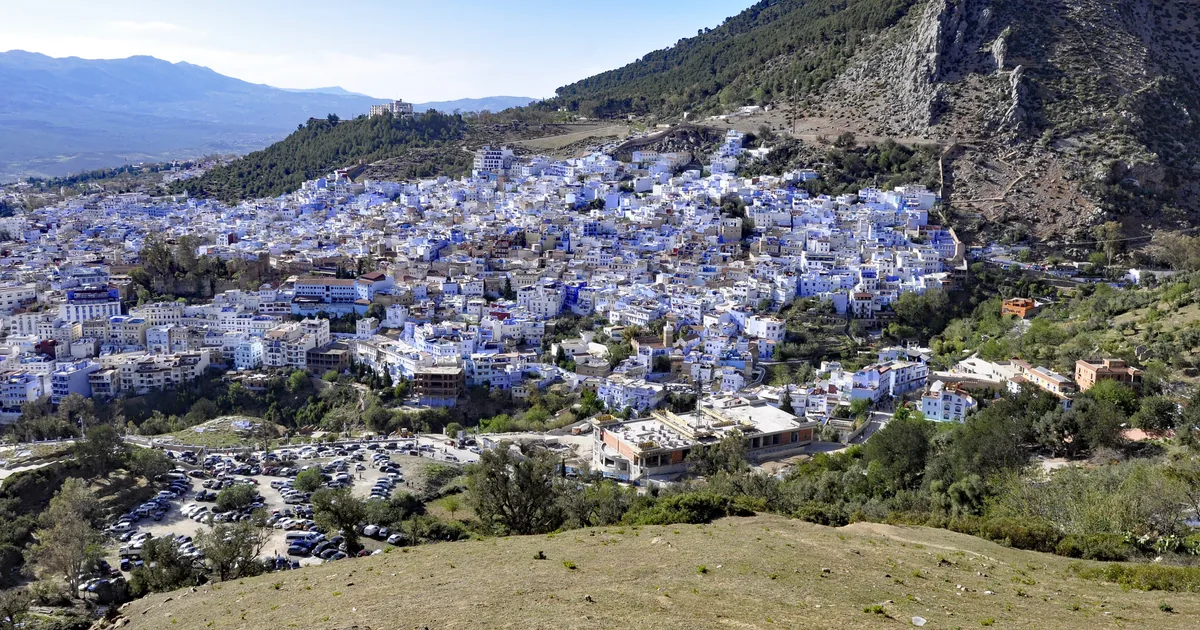
Short answer: yes, Chefchaouen is in the Rif mountains
Chefchaouen — also written Chaouen in French and Spanish, or Chefchaouene in older guides — is located in the western Rif mountains of northern Morocco. The town sits at an elevation of about 564 metres (1,850 feet) on the slopes of two peaks: Jebel ech-Chaouen ("the horns") that give the town its name, and the broader Talassemtane National Park that surrounds it.
Administratively, Chefchaouen is the capital of Chefchaouen Province in the Tanger-Tétouan-Al Hoceïma region — one of the twelve administrative regions of Morocco. The town has roughly 42,000 inhabitants, most of whom speak a Moroccan Arabic dialect alongside Spanish (a leftover from the Spanish protectorate of northern Morocco from 1912 to 1956) and increasingly French and English in tourism contexts.
So when search engines surface questions like "is chefchaouen considered rif", "is chefchaoun considered rif" or "chefchaouen est-elle dans le rif?" — the answer is unambiguously yes, both geographically (it sits in the Rif mountain range) and culturally (its history is woven with Riffian Berber traditions).
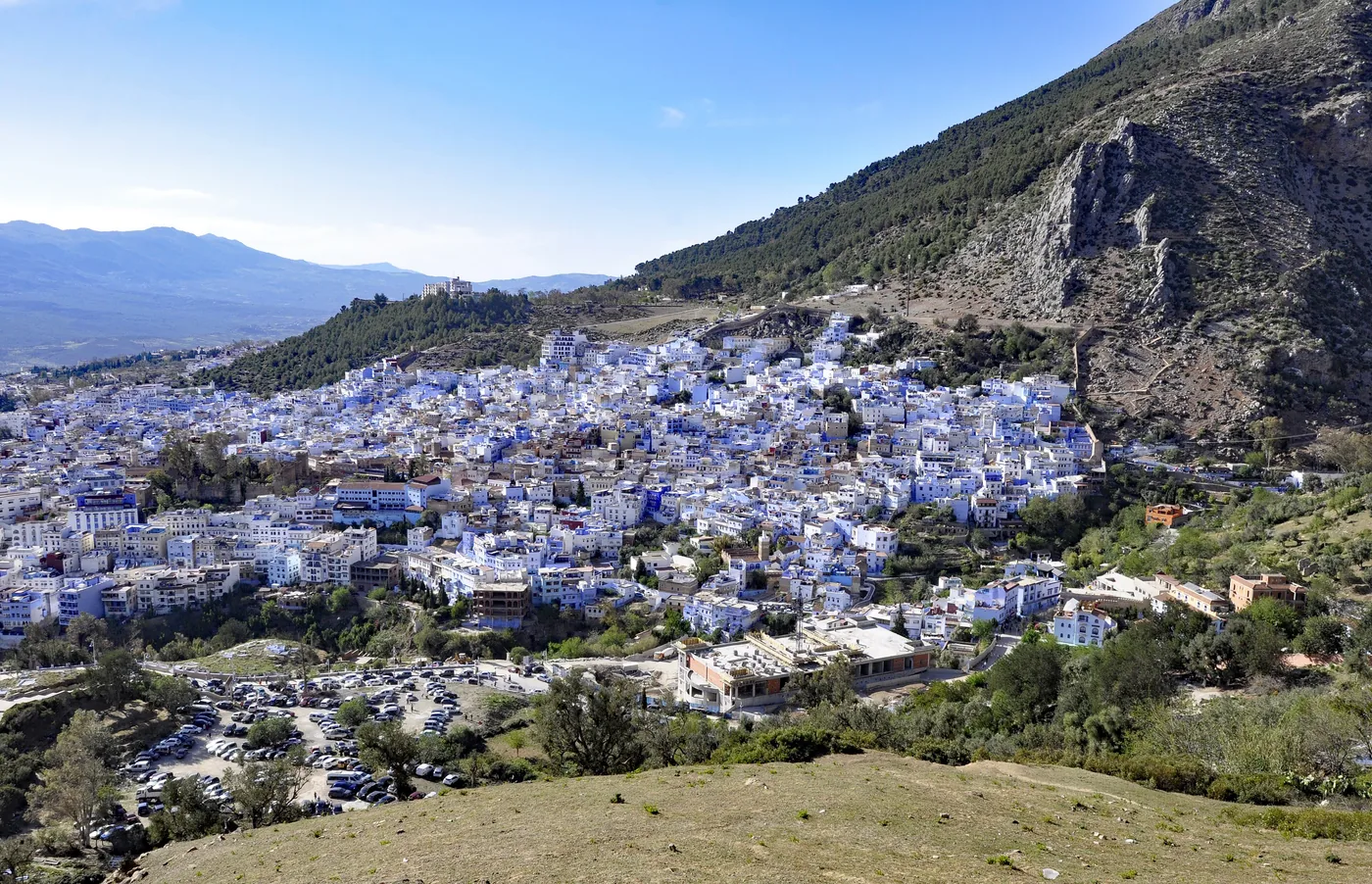
What exactly are the Rif mountains?
The Rif (in Tamazight: Arif, ⴰⵔⵉⴼ) is a mountain range that runs along Morocco's Mediterranean coast, from Tangier in the west to Nador and the Algerian border in the east, stretching roughly 350 kilometres end to end. It is one of three main mountain systems in Morocco, alongside the Middle Atlas and the High Atlas.
Key features of the Rif:
- Highest peak: Jbel Tidiquin at 2,456 metres (in the central Rif).
- Climate: much wetter than the rest of Morocco, with snow possible in winter at altitude.
- Vegetation: Mediterranean pine, cedar, and the famous Talassemtane fir.
- People: historically populated by Riffian Berbers (Imazighen), with their own dialect of Tamazight.
The Rif is divided informally into three sub-regions: the western Rif (around Chefchaouen, Tetouan, Tangier), the central Rif (Al Hoceima, Targuist), and the eastern Rif (Nador, the foothills toward Oujda). Chefchaouen sits firmly in the western Rif, which is also the most accessible to tourism.
Why Chefchaouen feels like a Rif town
Walking through Chefchaouen, the Rif identity is everywhere — it's not just geography on a map. Here's what gives it away:
- The buildings. Houses are stacked on the mountainside, with walls painted in the famous shades of blue. The architecture mixes Andalusian influences (refugees from medieval Spain settled here in the 15th century) with Riffian highland building techniques — thick walls for cold winters, small windows, terracotta-tiled roofs.
- The food. Goat cheese from Riffian highland herds, flatbread baked in communal ovens, tagines made with mountain herbs, and the much-loved bissara (split-pea soup) are distinctly Rif.
- The language. You'll hear a mix of Darija (Moroccan Arabic), Tarifit (the Riffian Berber dialect), and Spanish — the last a holdover from the Spanish protectorate that controlled this part of Morocco until 1956.
- The view. Climb up to the Spanish Mosque at sunset and look back: you're seeing the western Rif foothills tumble down toward the Mediterranean. The mountains are the dominant feature, not a backdrop.
A short history of Chefchaouen
Chefchaouen was founded in 1471 by Moulay Ali ben Moussa ben Rached El Alami, a sharif (descendant of the Prophet Muhammad) who built it as a fortress to defend against Portuguese incursions on the coast. The town then became a refuge for Muslims and Sephardic Jews fleeing the Reconquista in Spain, which is why the architecture and certain culinary traditions feel Andalusian.
For nearly 450 years, non-Muslims were forbidden from entering Chefchaouen — only three Westerners are recorded as having reached it before the 20th century, and one of them was killed for the trespass. The town opened to the outside world only when Spain occupied it in 1920 during the establishment of the Spanish protectorate.
The famous blue color is a more recent tradition — most accounts trace it to the 1930s, when Jewish refugees from Europe painted the walls blue as a symbolic reminder of the sky and divinity. Other accounts attribute the blue to keeping mosquitoes away or simply to keeping the town visually cool in summer. Whatever the origin, by the late 20th century the blue had become Chefchaouen's signature.
How to get to Chefchaouen
Chefchaouen has no train station and no commercial airport. You arrive by road. Here are the realistic options:
From Tangier (about 2 hours)
The most popular route. Around 115 km via the new A4 motorway through Tetouan. Options:
- CTM coach from Tangier: 4–6 daily departures, around 45–80 MAD.
- Grand taxi collectif: faster but cramped, leaves when full.
- Private taxi/transfer: roughly 600–900 MAD one way.
From Tetouan (about 1 hour)
The closest major city. 65 km via national road. Frequent grands taxis collectifs and minibuses.
From Fes (about 4 hours)
200 km through the western Middle Atlas and into the Rif. CTM and Supratours both run direct coaches; CTM is more comfortable. Tickets around 70–110 MAD.
From Casablanca (about 6 hours)
400 km via Rabat and Tangier. Direct CTM coaches exist but the journey is long; many travelers split it with a night in Tangier.
From Spain via the Tangier ferry
If you're arriving from Tarifa or Algeciras by ferry, you'll land at either Tanger Med port or Tanger Ville. From either, transfer to the central Tangier coach station and continue to Chefchaouen.
What to do with luggage when you arrive
Chefchaouen's medina is car-free, narrow and steep — it is genuinely tough on wheeled suitcases. The cobblestones are uneven, the alleys climb sharply toward the kasbah and the Spanish Mosque, and most riads are tucked at the end of unsigned passages.
If you arrive before check-in or are leaving after check-out, the practical options are:
- Riad luggage hold: most riads will store bags for arriving or departing guests. Confirm in advance.
- Café at the Outa el-Hammam square: the main plaza near the kasbah has cafés used to travelers — informal, no insurance.
- Dedicated storage near the bus station (Bab al-Ain): the most reliable option for non-guests; storage points within walking distance of the main entry to the medina.
A common mistake is to arrive on the morning bus from Tangier, drag a suitcase up the medina alleys to a riad that hasn't yet vacated your room, and then wait three hours in the courtyard. Storing the bags near the bus station and exploring on foot makes the first afternoon dramatically better.
What to see (and where the Rif backdrop matters)
- Plaza Outa el-Hammam — the main square, lined with cafés, dominated by the kasbah and the Grand Mosque.
- Kasbah and Ethnographic Museum — 18th-century walled fortress with a small garden inside.
- Ras el-Maa waterfall — a 10-minute walk uphill from the medina, where the river emerges from the rock.
- Spanish Mosque (Bouzaafer) — a 30-minute climb above the town, ruined and atmospheric, with the best view of Chefchaouen and the Rif beyond.
- Akchour waterfalls and God's Bridge — a day trip into Talassemtane National Park, about 30 km from town.
The Rif setting is what makes the trip worthwhile. The blue walls are charming, but it's the air, the altitude, the pine forests and the mountain horizon that travelers remember.
Quick FAQ
Is Chefchaouen in the Rif mountains? Yes — it sits at 564 metres in the western Rif, in Chefchaouen Province.
What language do people speak in Chefchaouen? Mostly Moroccan Arabic (Darija), with Tarifit (Berber) and Spanish widely understood. French and English in tourism.
Is Chefchaouen safe? Yes, very. It's one of the calmest towns in Morocco and a popular solo and family destination.
Can I drive to Chefchaouen? Yes — the A4 motorway from Tangier or Tetouan reaches the town outskirts; expect to park outside the medina.
How long should I stay in Chefchaouen? Two nights is a comfortable minimum: half a day for the medina, half a day for Akchour or the Spanish Mosque hike, plus arrival and departure travel.
Is the blue color natural? No — it's painted, and traditionally refreshed each year. The tradition dates to the 20th century.