Morocco Taxis: Petit Taxis, Grand Taxis, Fares and Travel Tips
Understand petit and grand taxis, meters, fares, airport pickups, ride-hailing rules, safety and traveling with luggage in Morocco.
Morocco Taxis: Petit Taxis, Grand Taxis, Fares and Travel Tips
Taxis are one of the easiest ways to move around Morocco, but first-time visitors can be confused by the difference between petit taxis and grand taxis.
Petit taxis handle short journeys inside one city. Grand taxis are larger and serve suburban, regional or intercity routes. This guide explains meters, fares, airport pickups, apps, safety and traveling with luggage.
Petit taxi versus grand taxi
| Taxi type | Typical use | Capacity | Fare system | Best for |
|---|---|---|---|---|
| Petit taxi | Journeys inside one city | Usually up to three passengers | Meter or locally regulated urban fare | Short city rides |
| Grand taxi | Suburban, regional or intercity routes | Larger shared vehicle | Fixed seat price or negotiated private hire | Groups, luggage and longer routes |
| Airport taxi | Airport to city or hotel | Depends on vehicle | Fixed or controlled airport fare | Arrivals with luggage |
| Private transfer | Pre-booked door-to-door trip | Car, SUV or van | Confirmed in advance | Families and late arrivals |
What is a petit taxi?
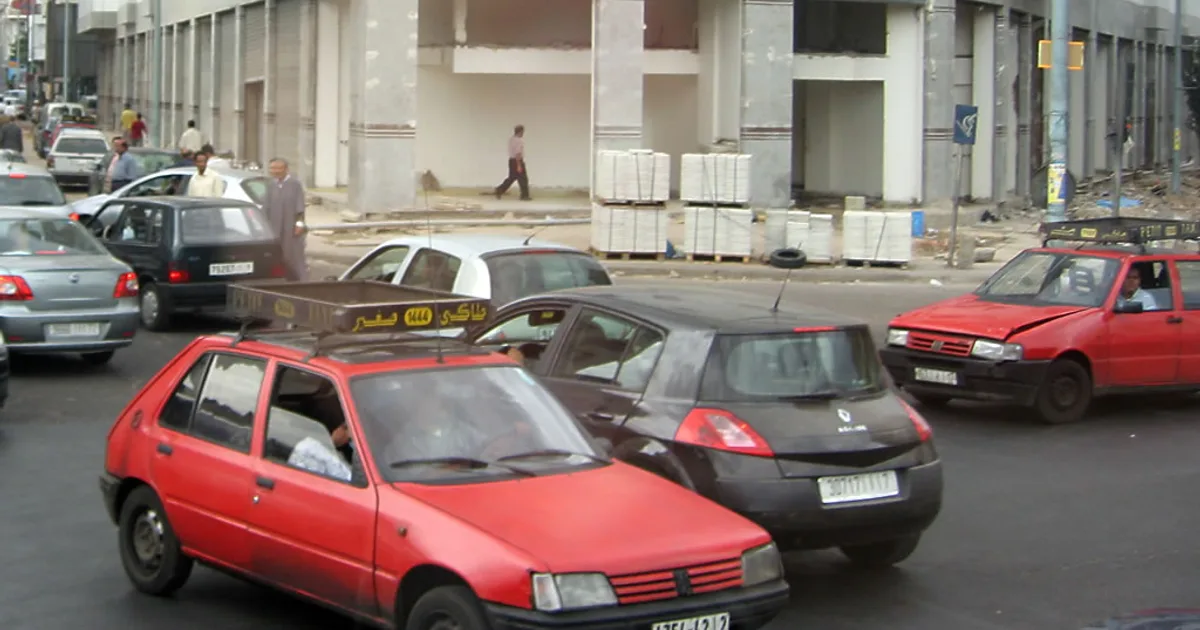
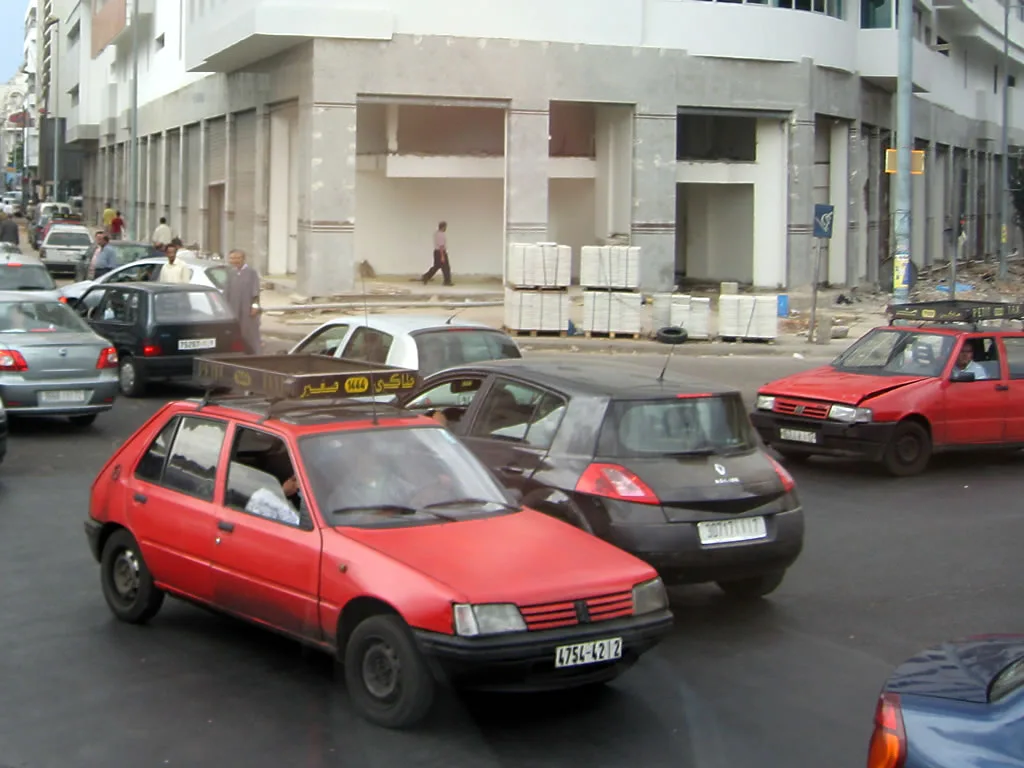
The petit taxi is Morocco’s standard city taxi. The National Tourist Office notes that it operates only within the city where it is licensed. Its color changes by city. Common examples include:
- Casablanca: red
- Agadir: red
- Rabat: blue
- Tangier: light blue or turquoise
- Marrakech: ochre, orange or yellow-toned
Vehicle models and exact shades vary, so look for the roof sign and taxi markings. Petit taxis are convenient for stations, hotels and attractions, but their boots are small. Families with several suitcases may need a grand taxi or transfer.
In some cities, a petit taxi may collect another passenger going in the same direction. Clarify before departure when exclusive use matters.
What is a grand taxi?
Grand taxis are larger vehicles used for longer journeys, suburban routes and travel between nearby cities or towns. Older grand taxis were frequently Mercedes sedans, but many routes now use newer multi-passenger vehicles.
A shared grand taxi follows a defined route and usually leaves when enough seats are occupied. Passengers pay for one seat, although you can sometimes buy the remaining seats or negotiate private use.
Grand taxis are useful for nearby towns, villages, routes with limited buses and groups carrying luggage. At the station, ask for the destination by name and confirm whether the quote is per person or for the entire vehicle.
Do Moroccan taxis use meters?
Petit taxis in major cities commonly use meters. Before moving, ask:
- “Le compteur, s’il vous plaît.”
- “Sh3el compteur 3afak.” in Darija.
When no meter is used, agree on the total fare first. Grand taxis usually have a seat price or negotiated private fare, while airport taxis may follow fixed rates. Do not begin a ride when the pricing method is unclear.
How much do taxis cost in Morocco?
There is no nationwide fare. Prices vary by city, distance, time, traffic and taxi category. Short city journeys are generally inexpensive, while airport and cross-city trips cost more.
Ask your accommodation for a normal local estimate, use the meter when available, check airport fare boards and confirm whether a grand-taxi quote is per seat. Night tariffs can be higher. Pay in Moroccan dirhams and carry small notes.
Morocco airport taxis
Major airports have official taxi ranks, and some use a booth or dispatcher. ONDA introduced the Kech.cab system at Marrakech Menara Airport for authorized taxi ordering.
Follow airport signs, ignore unsolicited terminal offers, check the displayed fare and confirm that it covers passengers and bags. Keep the hotel address in French or Arabic. Riads in pedestrian medinas may require a drop-off at the nearest gate, so request the meeting point in advance.
A pre-booked transfer can be easier for early flights, families or several suitcases.
Taxis at railway and bus stations
Petit taxis are usually available outside major railway stations such as Casa Voyageurs, Casa Port, Rabat Ville, Marrakech, Fes and Tangier Ville.
Station areas are also where tourists are most likely to receive an inflated opening quote. Move toward the official taxi line instead of accepting the first person who approaches you.
When leaving a large station, show the destination on your phone. Many hotels have similar names, and medina properties may use an address that is difficult for drivers to locate.
Are ride-hailing apps legal in Morocco?
Ride-hailing regulation in Morocco remains unsettled. Apps may be visible in some cities, but authorities have stated that passenger transport without proper authorization is illegal while a future framework is discussed.
For predictable service, use a licensed taxi, official airport service, hotel-arranged car or licensed transfer. Do not depend on one app for an airport departure or late-night journey.
Taxi safety tips for travelers
Most journeys are routine. Note the taxi number, share your route when traveling alone at night and follow the trip on your phone. Keep passports, money and laptops with you rather than in the boot. Pay after arrival, count your change and ask a hotel or restaurant to call a known taxi late at night.
Common taxi misunderstandings and scams
Common problems include an inactive meter, a changed arrival price, confusion between a per-seat and full-vehicle fare, and claims that a hotel is closed. Confirm the fare and destination before moving, contact accommodation directly and carry 10, 20 and 50 MAD notes.
Traveling by taxi with luggage
Petit taxis have limited boot space. Choose a grand taxi, van or transfer when several travelers have luggage, you carry sports equipment, need a child seat or travel between cities.
Never leave bags unattended while negotiating. Keep your phone, passport and money in a personal bag inside the vehicle.
Store your luggage before taking a taxi
For a long gap between checkout and an evening departure, storing luggage can reduce taxi costs and make the day easier.
Browse Blastey luggage storage in Morocco, the city directory, or city options in Marrakech, Casablanca and Tangier. Confirm opening hours before planning a transfer.
Frequently asked questions
What is the difference between a petit taxi and a grand taxi?
A petit taxi is used inside one city and usually carries up to three passengers. A grand taxi is larger and serves suburban, regional or intercity routes, either as a shared vehicle or private hire.
Do taxis in Morocco accept cards?
Cash remains the safest assumption. Carry Moroccan dirhams in small denominations. Some private transfer companies may accept online payment, but ordinary street taxis often do not.
Should I tip a taxi driver in Morocco?
Tipping is optional. Travelers often round up a metered fare or leave a few dirhams for helpful service.
Can a petit taxi travel between cities?
Normally no. Petit taxis are licensed for trips inside their own city. Use a grand taxi, train, coach or private transfer for intercity travel.
Are Moroccan taxis safe for solo travelers?
Licensed taxis are widely used by residents and visitors. Solo travelers should note the taxi number, follow the route, use trusted pickups at night and keep valuables with them.
Final thoughts
Morocco’s taxi system becomes simple once you understand the categories: petit taxis for city trips, grand taxis for longer routes and official airport taxis or transfers for arrivals with luggage.
Clarify the price before departure, use the meter when available and confirm whether a shared fare is per person. Storing unnecessary bags with Blastey also gives you more vehicle options and a less stressful travel day.
Editorial sources and image credit
- Moroccan National Tourist Office: Getting around Morocco
- ONDA: Marrakech Menara Airport Kech.cab taxi system
- ONDA: Marrakech Menara Airport services
- Morocco World News: proposed legal framework for ride-hailing
- Casablanca petit-taxi image: Goose/Wikimedia Commons, CC BY-SA 3.0.