Most Secure Cities in Morocco: Marrakech, Laayoune, Dakhla and Bouskoura
Compare Marrakech, Laayoune, Dakhla and Bouskoura, with practical safety, transport and luggage-storage advice for a more confident trip around Morocco.
Most Secure Cities in Morocco: Marrakech, Laayoune, Dakhla and Bouskoura
Morocco combines historic medinas, Atlantic beaches, desert landscapes and modern urban districts. Before booking, many visitors ask the same question: what are the most secure cities in Morocco?
There is no official national ranking that can identify one Moroccan city as definitively “the safest.” Safety depends on the neighborhood, time of day, type of trip and the traveler’s behavior. A crowded medina presents different challenges from a quiet residential suburb or a remote desert road. For most visitors, the realistic concerns are pickpocketing, misleading directions, inflated taxi prices and losing sight of personal belongings rather than serious violent crime.
This guide focuses on Marrakech, Laayoune, Dakhla and Bouskoura. Each offers a different kind of reassuring travel experience. Marrakech has extensive visitor infrastructure, Laayoune has a spacious and orderly urban rhythm, Dakhla offers relaxed coastal tourism, and Bouskoura provides a quieter base near Casablanca.
Travel note: Conditions can change. Review your government’s latest Morocco travel advice, use licensed transport, avoid isolated places after dark and keep valuables secure.
Quick comparison
| City | Best for | Atmosphere | Main point of attention |
|---|---|---|---|
| Marrakech | First trips, culture, food and city breaks | Energetic and tourism-oriented | Crowds, scams and pickpocketing |
| Laayoune | Southern culture and regional travel | Calm, spacious and locally focused | Long roads and regional travel advice |
| Dakhla | Beaches, kitesurfing and nature | Relaxed and outdoorsy | Remote excursions and ocean conditions |
| Bouskoura | Families and quiet stays near Casablanca | Residential and green | Transport planning and isolated forest areas |
1. Marrakech: secure when you manage the crowds
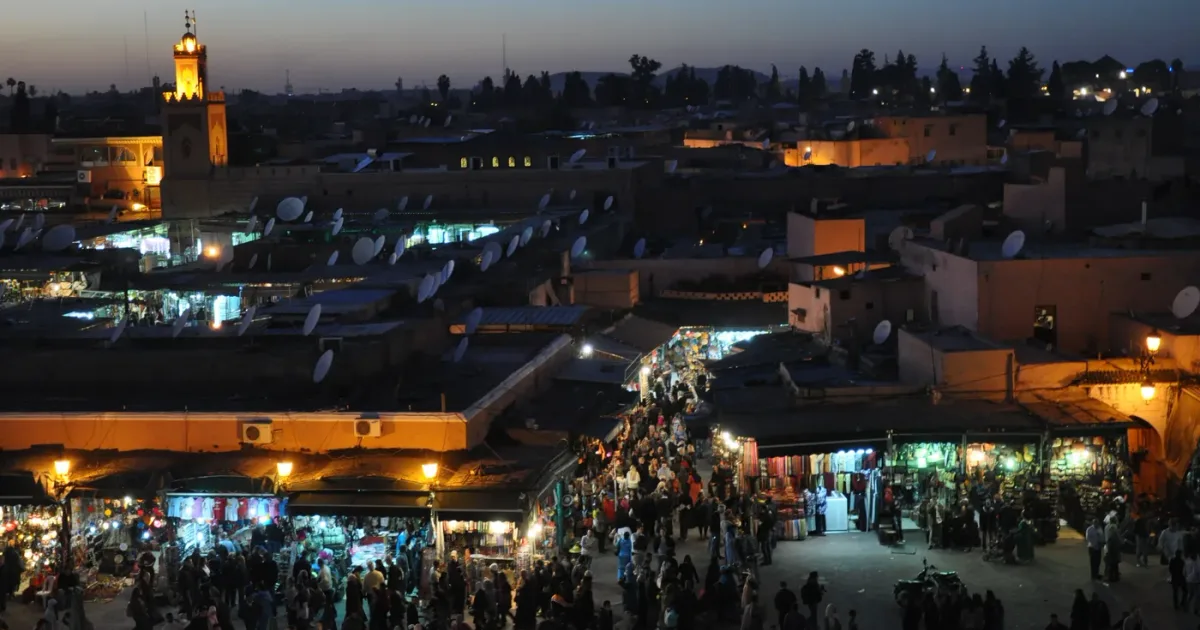
Marrakech is Morocco’s best-known leisure destination. It has an established tourism ecosystem with hotels and riads, airport transfers, tourist police, licensed guides, restaurants accustomed to international guests and a wide range of organized excursions.
This makes Marrakech a reassuring choice for a first visit. In districts such as Guéliz, Hivernage and the principal hotel areas, travelers are rarely far from a café, pharmacy, taxi or busy public place.
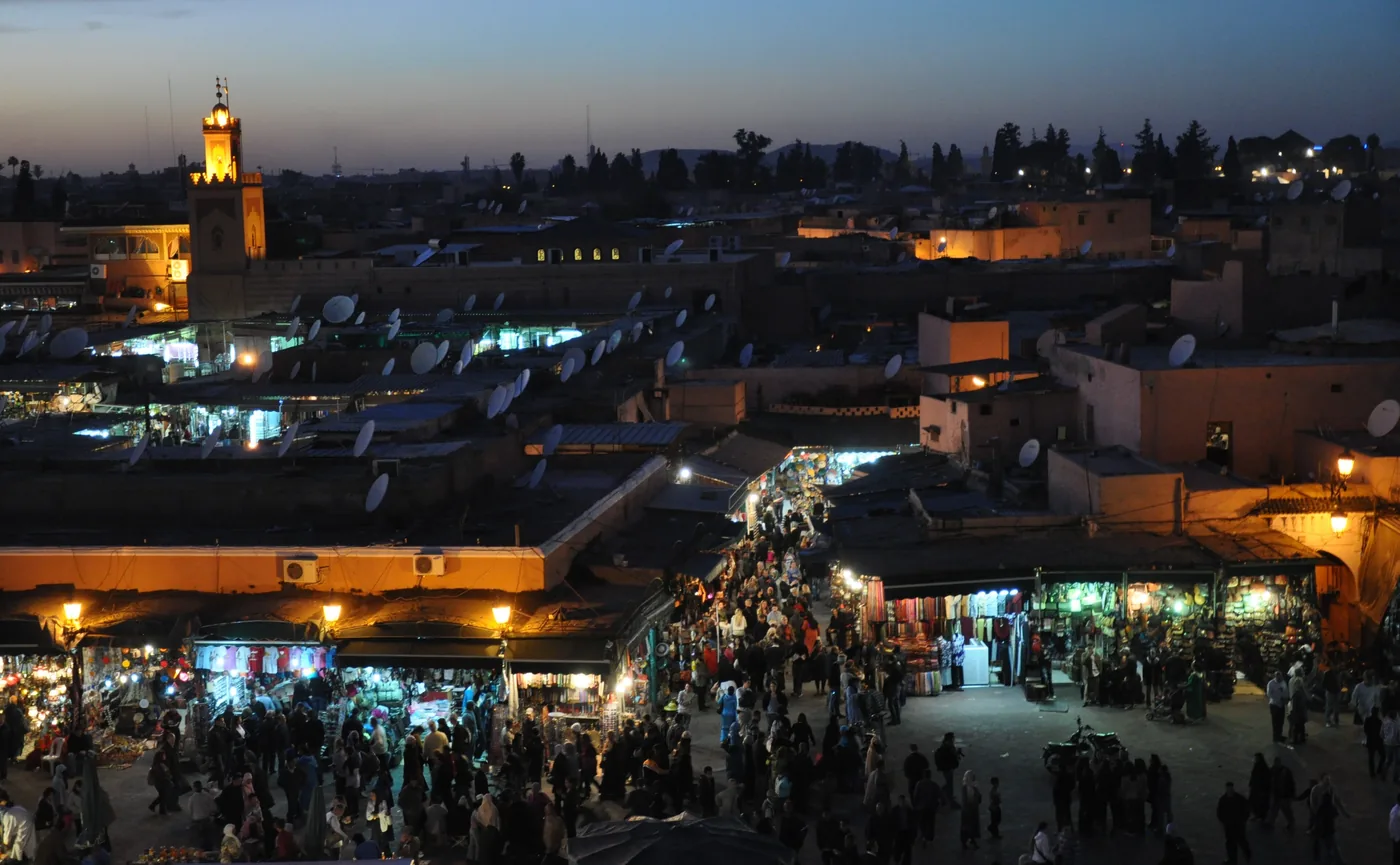
The historic medina is different. Jemaa el-Fna, the souks and the narrow lanes are fascinating but crowded. The most common problems involve opportunistic theft, unofficial guiding, confusing directions, persistent selling and overcharging. These situations may feel uncomfortable even when they do not represent a serious physical threat.
To explore confidently, carry a zipped crossbody bag, keep your phone away from passing scooters and download an offline map. Ask your riad to arrange a transfer when arriving late, particularly when the property is deep inside the medina. Use a metered taxi when possible or agree on the price before departure.
Solo women may receive unwanted comments or persistent sales approaches. Walking with purpose, using well-reviewed accommodation and taking a trusted taxi after dark can make the experience more comfortable.
Explore Marrakech without your bags
Suitcases are difficult to pull through medina alleys or around Jemaa el-Fna. Early arrivals and late departures also create awkward gaps between a hotel stay and a train or flight.
Check the latest availability for luggage storage in Marrakech with Blastey. Leaving bags at a suitable point can help you remain mobile, protect your belongings and enjoy the city without dragging luggage through crowded streets.
2. Laayoune: spacious southern city life
Laayoune is the largest urban center in Morocco’s southern region. Its broad boulevards, modern public spaces and lower concentration of international tourists can create an immediate sense of calm after busier northern destinations.
Daily life is shaped by local commerce, administration, Sahrawi culture and connections across southern Morocco. Visitors can discover cafés, markets and local traditions without the level of tourist pressure found in Marrakech’s busiest areas.
Normal city precautions still apply. Keep control of your wallet and phone in transport areas, use registered taxis and avoid poorly lit outskirts late at night.
The more important safety consideration is often outside the city. Distances are significant, roadside services can be widely separated and mobile coverage may vary. Travelers planning desert excursions or long drives should use an experienced local operator, carry water and confirm fuel stops.
The wider Western Sahara region has a sensitive political status. Government advisories may distinguish between cities, main roads, remote zones and borders. Avoid demonstrations, military areas and unauthorized off-road exploration. Never enter restricted territory or suspected mine areas.
3. Dakhla: relaxed travel between ocean and desert
Dakhla is built on a narrow peninsula surrounded by Atlantic water, desert landscapes and a lagoon known internationally for kitesurfing and wind sports.
The city’s visitor atmosphere is relaxed. Many travelers move between the airport, central Dakhla and organized lagoon camps. Resorts and sports operators frequently provide transfers, equipment, meals and excursions, reducing the need to arrange every journey independently.
Dakhla suits couples, outdoor travelers, digital nomads and solo visitors seeking a quieter schedule. Most major attractions—including the White Dune, Dragon Island and lagoon beaches—require transport.
Book water sports with established operators that provide suitable safety equipment. Check wind, tide and ocean conditions before entering the water, and do not walk far onto tidal areas without local guidance. For remote camps, use organized transfers, carry sun protection and water, and confirm what is included before paying.
The calm experience of the city and lagoon resorts should not be confused with the different risks of remote desert travel. Stay on recognized routes, follow local instructions and consult current travel guidance before a long overland journey.
4. Bouskoura: a quiet base near Casablanca
Bouskoura sits south of Casablanca and is better understood as a residential and business area than a traditional tourist city. Modern housing developments, schools, golf facilities and access to Bouskoura Forest give it a calmer atmosphere than central Casablanca.
For families, business travelers or visitors staying with residents, Bouskoura offers more space and less street intensity. It is also well positioned for Casablanca, Mohammed V International Airport and nearby commercial zones.
The trade-off is that Bouskoura is spread out and often easier to navigate by car. Before booking accommodation, verify the exact location and travel time to central Casablanca, the airport or the railway network.
Bouskoura Forest is popular for walking, exercise and family outings. Visit during active daytime hours, remain on familiar paths and avoid isolated sections after sunset. Use recommended transport at night and do not assume that every quiet residential street is convenient for pedestrians.
Bouskoura is not ideal for travelers wanting to walk directly into a historic medina. It is a strong option for those prioritizing tranquility, family space, airport access or business travel.
Safety tips for every Moroccan city
A few habits make travel around Morocco easier:
- Use official or recommended transport, especially late at night.
- Carry small cash for taxis and small purchases without displaying your full wallet.
- Separate valuables, keeping your passport and backup card away from your daily money.
- Choose lively streets after dark instead of isolated shortcuts.
- Confirm excursions in writing, including transport, guide, meals and equipment.
- Respect local customs, particularly away from major beach resorts.
- Store unnecessary luggage during city visits and travel connections.
How Blastey supports easier travel
Luggage can reduce awareness, complicate taxi changes and make a short visit stressful. Blastey connects travelers with verified luggage-storage options in Morocco. Depending on the active location, visitors can book online, document bags at drop-off and collect them during the selected window.
This is particularly useful when arriving before hotel check-in, leaving after checkout or spending a few hours in a city between a train and a flight.
Browse Blastey luggage-storage cities or search current storage availability. Coverage changes as partner locations are added, so check the live page for your date and neighborhood.
Frequently asked questions
What is the safest Moroccan city for first-time visitors?
Marrakech is often the easiest choice because of its extensive tourism infrastructure and frequent transport. Its popularity also means travelers should be alert to petty theft, unofficial guides and scams.
Are Laayoune and Dakhla safe for tourists?
Central Laayoune and Dakhla are commonly experienced as calm destinations. Greater precautions relate to remote excursions, long-distance roads, ocean activities and the wider region’s advisory context.
Is Bouskoura worth visiting?
Bouskoura is useful as a quiet base near Casablanca, particularly for families, business travelers and airport access. It is less suitable for visitors seeking a walkable historic center.
Is Morocco suitable for solo female travel?
Many women visit Morocco independently. Unwanted attention can occur in busy tourist areas. Well-reviewed accommodation, planned transport and avoiding isolated streets improve comfort.
Final thoughts
Marrakech, Laayoune, Dakhla and Bouskoura offer four different versions of secure travel. Marrakech provides infrastructure and experience; Laayoune offers spacious southern city life; Dakhla combines organized outdoor tourism with a relaxed coastal rhythm; and Bouskoura delivers residential calm near Casablanca.
No destination is risk-free. Plan transport, verify excursions, monitor official advice and keep control of your belongings. With those habits—and the freedom of traveling without unnecessary luggage—Morocco can be accessible, welcoming and deeply rewarding.
Editorial sources and image credit
- UK government: Morocco safety and security advice
- Government of Canada: Morocco travel advice
- Australian Smartraveller: Morocco travel advice
- Moroccan National Tourist Office: Dakhla
- Jemaa el-Fna image: Jorge Láscar/Wikimedia Commons, CC BY 2.0.